

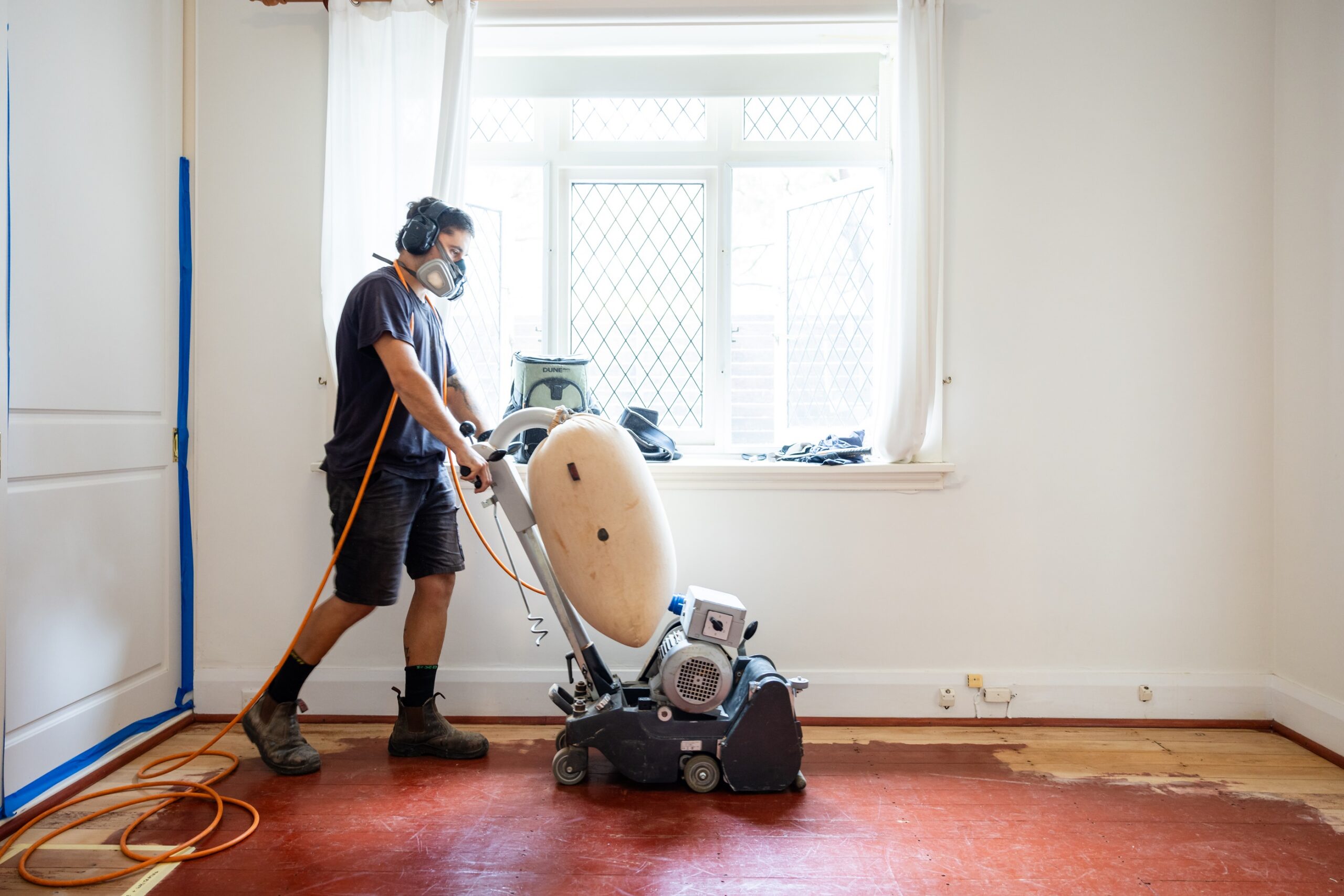
If you’ve just bought an older home and you’re looking at the timber floors wondering whether they’re beyond saving, you’re not alone. It’s one of the questions we’re asked most often at Abacus Flooring.
The short answer is that most solid timber floors can be sanded several times during their lifetime. Exactly how many depends on the type of flooring, its thickness and how much timber remains above the tongue-and-groove joint.
The encouraging news is that many older Sydney homes still have original hardwood floors with plenty of life left in them. We’ve restored countless timber floors that homeowners assumed would need replacing, only to find they were excellent candidates for sanding and polishing instead.
It all comes down to the wear layer
Every solid timber floor has what’s known as the wear layer. This is the section of timber above the tongue-and-groove joint that can safely be sanded.
A professional sanding generally removes around 1 to 2mm of timber. Because of that, the remaining wear layer determines how many more times the floor can be refinished.
| Board Type | Approximate Wear Layer | Estimated Sanding Cycles |
|---|---|---|
| 19mm solid hardwood | 6 to 8mm above groove | 5 to 6 times |
| 12mm solid hardwood | 4 to 5mm above groove | 3 to 4 times |
| Engineered hardwood (3mm+ veneer) | 2 to 3mm veneer | 1 to 2 times |
| Thin engineered (less than 2mm veneer) | Under 2mm | 0 to 1 times |
Many Australian species such as Blackbutt, Spotted Gum and Tallowwood were installed as solid hardwood flooring, giving them an impressive lifespan when properly maintained.
Older homes often have better timber than people expect
Homes built between the 1920s and 1970s commonly feature thick, high-quality hardwood flooring. In suburbs around Sydney, including Manly, Freshwater and Balgowlah, it’s not unusual for these original floors to have only been sanded once or twice.
Even when they’re covered in scratches, worn coatings or old carpet adhesive, the timber underneath is often in excellent structural condition. A professional inspection can determine how much usable timber remains before any work begins.
Signs your floor is still suitable for sanding
A floor doesn’t need to look perfect to be worth restoring. Some of the best results come from floors that initially appear beyond repair.
Positive signs include:
- The floor feels solid with minimal movement underfoot.
- The boards still have good thickness above the tongue-and-groove.
- Damage is mainly cosmetic, such as scratches, fading or worn finishes.
- Minor cupping rather than severe distortion.
- Localised stains instead of widespread structural damage.
Many of the scratches and worn patches we see are caused by everyday habits rather than age. We’ve previously written about the common habits that are destroying your timber floors, which explains how simple changes can help protect newly restored floors for years to come.
When a floor may have reached its limit
There does come a point where sanding is no longer the right solution.
Some warning signs include:
- Boards that have become noticeably thin.
- Tongue-and-groove joints that are exposed or already sanded through.
- Splitting boards or crumbling edges.
- Structural cracks extending well below the surface.
- Significant moisture damage that has affected the timber itself.
That doesn’t always mean full replacement is necessary. In many cases, individual boards can be repaired or replaced before the remainder of the floor is sanded and polished.
Full sanding or a light sand and recoat?
Not every tired-looking floor needs to be sanded back to bare timber.
A full sand removes the existing coating and a small amount of timber, making it the best option for scratches, most stains or previous coating failure.
A light sand and recoat is much lighter. It lightly abrades the existing finish before applying fresh coats, removing almost no timber at all. This makes it an excellent maintenance option for floors that are still in good condition.
Engineered timber floors require extra care
Engineered timber flooring can sometimes be sanded, but it depends entirely on the thickness of the real timber veneer.
Products with a veneer of 3mm or more may allow one or two light sanding cycles. Floors with thinner veneers often cannot be sanded without exposing the core beneath.
If you’re unsure which type of flooring you have, a flooring specialist can usually identify it during an inspection.
Should you repair or replace your timber floor?
Before deciding, ask yourself a few practical questions:
- Is the subfloor still structurally sound?
- How much wear layer remains?
- Are the issues cosmetic or structural?
- Do you want to preserve the original character of the home?
In many situations, restoring an existing hardwood floor delivers better long-term value than installing new flooring. Older Australian hardwood is incredibly durable and often difficult to match with modern products.
Start with a professional assessment
The best way to know whether your floor can be sanded again is to have it inspected by someone who works with timber flooring every day.
At Abacus Flooring, we assess the condition of the timber, estimate the remaining wear layer and recommend the most practical solution for your home. Sometimes that’s a full sand and polish, while other projects may only require repairs or a light sand and recoat.
If you’d like expert advice on whether your timber floors can be restored, arrange an obligation-free assessment. We’ll help you understand your options so you can make an informed decision before committing to replacement.