

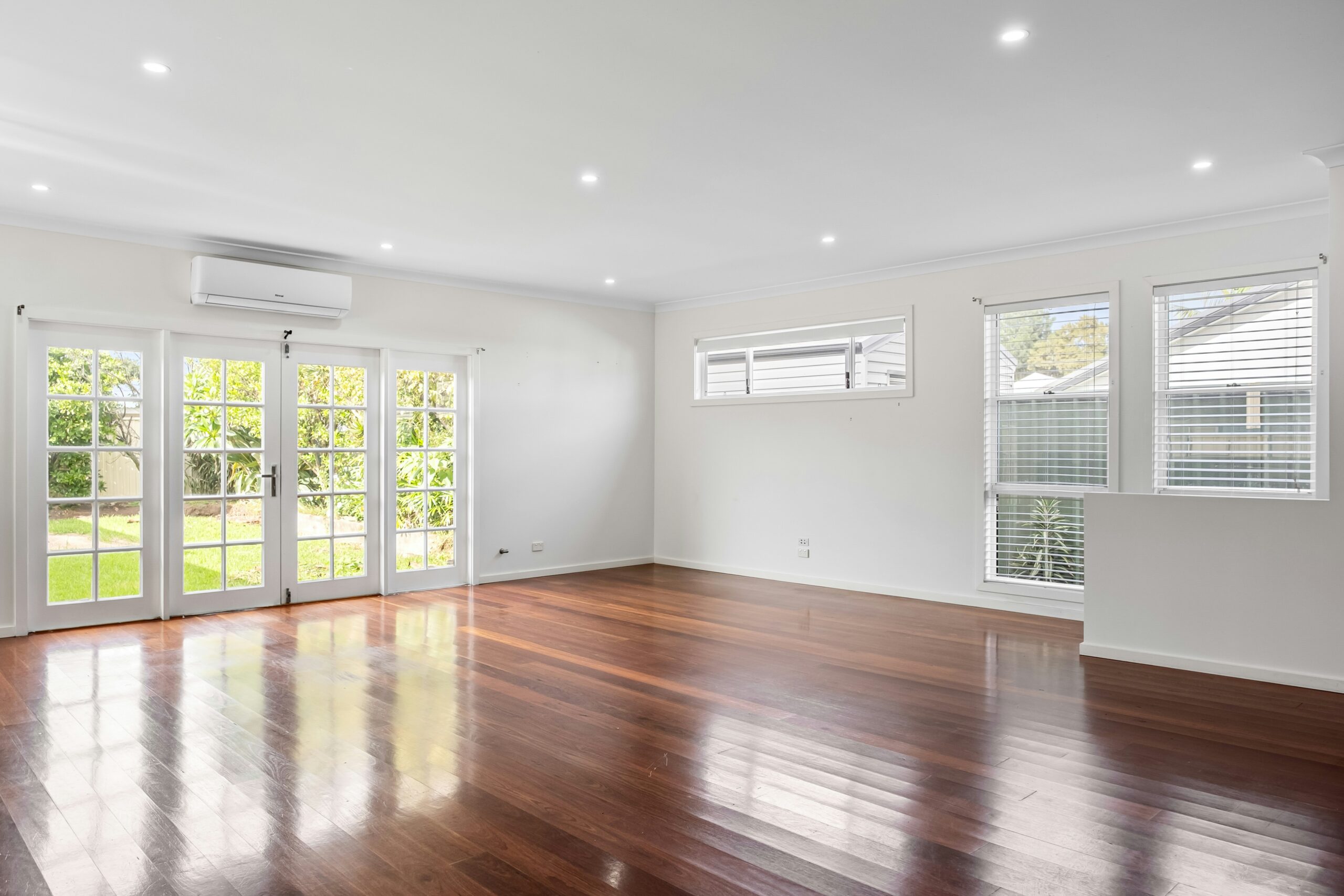
If you’re mid-renovation and staring down a to-do list that includes both painting your walls and refinishing your timber floors, you’ve probably asked yourself: which one comes first? It’s a fair question, and getting the order wrong can cost you time, money, and a whole lot of frustration. We get asked this all the time by Sydney homeowners, so here’s a straightforward answer.
Paint First, Sand Second. Every Time.
The short answer is: paint your walls first, then sand and polish your floors.
It’s one of those renovation rules that, once you understand the reasoning, becomes second nature. Both tasks are messy in their own way, and the order in which you tackle them determines whether that mess becomes your problem or simply part of the process.
Why Painting First Makes Sense
Paint is unpredictable
No matter how careful you are, painting walls means drips. It means spatters from rollers, the occasional rogue brushstroke, and fine mist settling where you least expect it. If your floors have already been freshly sanded and coated, that paint landing on them is a real problem. Cleaning it off a cured polyurethane finish without causing damage is tricky, and in some cases, you could be looking at localised re-sanding just to fix a few drips.
Do the painting first and any mess that hits the floor simply gets sanded away later. Problem solved before it even starts. And if you’re still working out what wall colours go best with your timber floors, it’s worth locking that in before you pick up a paintbrush too.
Primer and paint fumes can affect floor coatings
This one catches a few people off guard. Solvent-based primers and paints release fumes that can interfere with freshly applied floor finishes during the curing process. Doing both at the same time, or painting shortly after coating your floors, can lead to adhesion issues or surface contamination. Keeping the two tasks separate protects the integrity of your floor finish.
Why Floor Sanding Should Come Last
Sanding generates an enormous amount of dust
Anyone who has had their floors professionally sanded knows this well. Even with industrial dust extraction equipment like we have at Abacus, fine dust particles can still travel. They settle on walls, skirting boards, and windowsills. If you sand first and then paint, there’s a chance the dust will have embedded itself into surfaces and can affect how evenly your paint adheres.
You might think a wipe-down would solve it, but fine dust particles embed into bare plaster and primer in a way they simply don’t with a sealed, painted surface.
A Simple Renovation Schedule to Follow
To keep things simple, here is the sequence that works best when you are doing both painting and floor sanding in the same renovation:
- Do any major structural work first (plastering, cornices, architraves)
- Paint your walls and ceilings (don’t stress about drips on the floor)
- Sand and polish your floors
- Move furniture a decor in
Once the floors are done, give them proper time to cure before moving your furniture in. For everything you need to know, see our guide on how long polished floors take to dry.
Whether you’re looking for a floor sander in Manly or Sydney-wide, the team at Abacus Flooring is happy to chat through the process with you.
Book a free quote and let the team take it from there.