

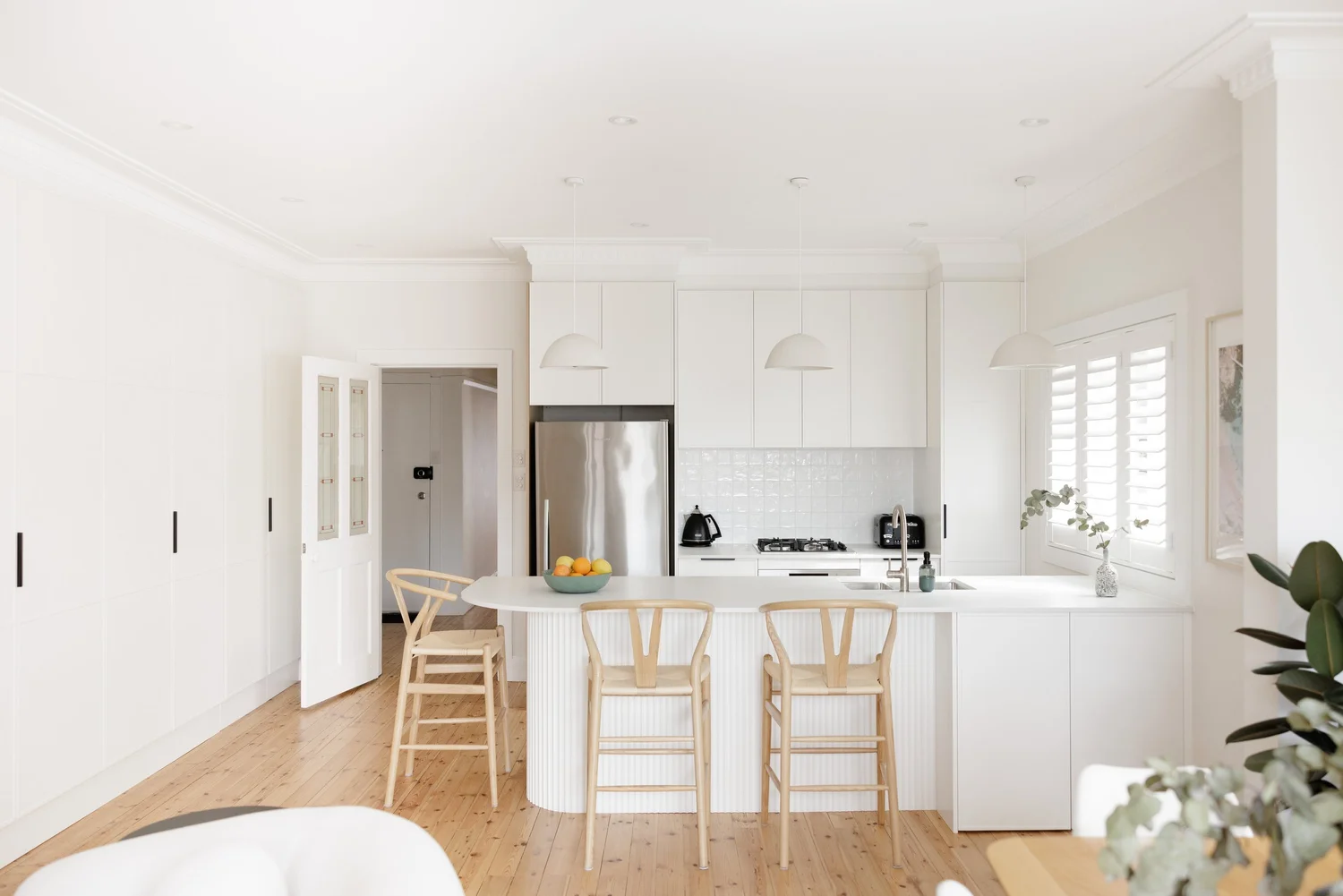
Timber floors can look fantastic in a kitchen, but they do need a bit of extra care. Between spills around the sink, chairs being pushed across the floor and constant foot traffic, it’s easy for the finish to start showing signs of wear before the rest of your home.
At Abacus Flooring, we’ve been sanding and polishing timber floors across Sydney since 1992, so we’ve put together some practical advice on looking after your kitchen flooring and avoiding damage that could lead to more extensive repairs.
Why do timber kitchen floors need extra care?
Unlike tiles, timber naturally responds to moisture and changes in humidity and even with a good protective coating, it isn’t completely waterproof. If water gets through gaps between boards or areas where the coating has worn away, it can cause staining, swelling or cupping.
As kitchens also tend to have busy spots, particularly around the sink, benchtops and dining table, these areas often show wear first, so they’re worth keeping an eye on.
How can you prevent water damage?
Wipe up spills and watch for leaks
Spills are unavoidable in a kitchen, but leaving water sitting on timber can cause problems, so it’s best to wipe up splashes as soon as you notice them, especially around the sink and dishwasher.
It’s also worth checking around appliances occasionally, as a slow leak beneath the dishwasher or fridge can go unnoticed until the floor starts showing signs of damage.
Keep an eye on the protective coating
The coating on your timber floor helps protect it from everyday moisture and wear, but over time, you might notice dull patches, uneven colour or areas where the finish looks worn.
Rather than waiting until bare timber is showing, it’s worth looking into maintenance early, as a fresh coat may be enough depending on the condition of the existing finish.
Be careful with mats and cleaning products
A mat near the sink can help catch splashes, but it’s important to choose one that won’t trap moisture or react with your floor’s finish. Lifting it regularly will also help you make sure the timber underneath stays dry.
For cleaning, a lightly damp microfibre mop and a product suited to your floor’s finish will usually do the job. Steam mops, harsh cleaning products and excess water can damage the coating or timber underneath.
How can you reduce scratches on timber kitchen floors?
Protect chairs and heavy appliances
Chairs and stools can leave scratches when they’re moved across the floor every day, so fitting felt pads underneath is a simple way to help prevent damage. Just remember to replace them when they wear out or collect dirt.
It’s also important to take care when moving heavy appliances because dragging a fridge or dishwasher across timber can leave deep gouges that aren’t always easy to repair.
Keep crumbs and grit off the floor
Crumbs, dirt and small bits of grit can easily build up around kitchen benches and dining areas, particularly in busy family homes. If they’re left on the floor, they can get caught underfoot and gradually scratch the protective finish.
Regular sweeping or vacuuming with a timber-safe attachment will help keep these areas clean and prevent unnecessary wear.
Which timber floor finish works best in kitchens?
For kitchens, a durable polyurethane finish is generally a good choice, as it provides a protective coating that helps timber withstand everyday spills, foot traffic and surface wear. Both water-based and solvent-based polyurethane can work well, although the level of protection depends on the particular product rather than simply whether it’s water-based or solvent-based.
Water-based polyurethane is often preferred for its clearer, more natural appearance, while solvent-based polyurethane gives timber a warmer, more amber tone. For a busy kitchen, we’d recommend choosing a quality finish suited to the amount of wear the floor receives, rather than making the decision on appearance alone.
We’ve explained the differences in more detail in our guide to comparing oil-based and water-based polyurethane floor finishes.
What if your kitchen floor is already damaged?
If you’ve noticed scratches, stains or changes in the shape of your floorboards, the first step is to work out how serious the damage is, as not every problem requires the floor to be completely sanded back.
Light surface scratches may only need a fresh coat of finish, while deeper scratches and gouges may require sanding. If you’re dealing with water stains or swollen boards, it’s important to identify and fix the source of moisture before attempting any repairs, as the damage may extend into the timber itself.
If you’re unsure how much damage has occurred, it’s worth having the floor assessed before deciding on a treatment, particularly if it’s been sanded previously.
Keep your kitchen floor looking its best
Looking after your timber kitchen floor doesn’t have to be complicated, and a little regular care can go a long way towards protecting the finish and preventing any damage from becoming worse.
If your kitchen floor is scratched, stained or worn, get in touch with our team for a free quote. We can assess the condition of your floor and recommend the most suitable way to restore it.
Featured image: Project by Horton Construction