

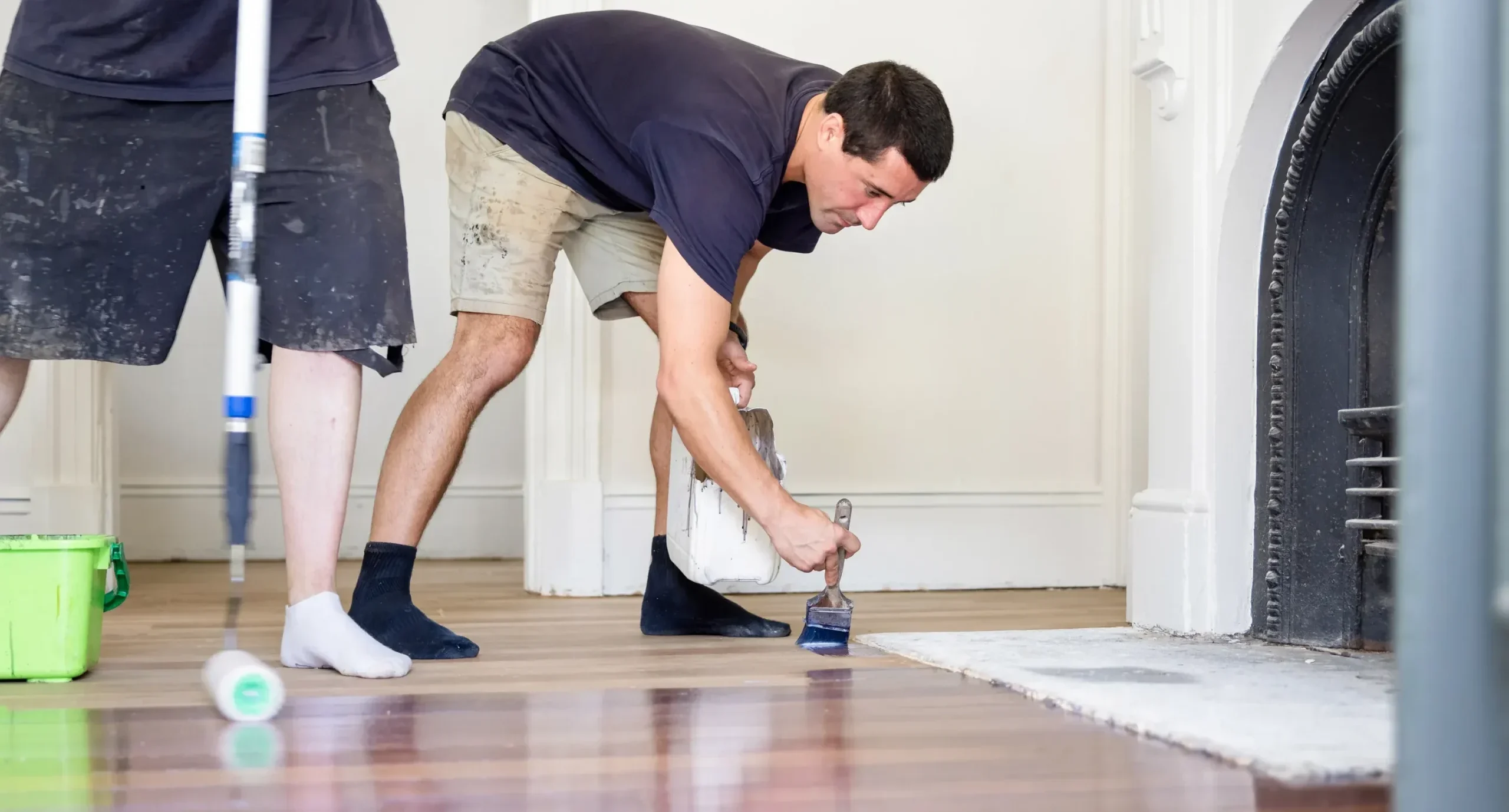
If you have timber floors at home, chances are you’ve wondered what finish is going to give them the best look and the longest life. It is one of the most common questions we get asked and honestly, it is a great question. The finish you choose really does make a difference, not just in how your floors look on day one, but how they hold up over months and years of everyday family life.
The two most popular options are water-based polyurethane and solvent-based polyurethane. Both are durable, both look fantastic when applied correctly, and both have their place depending on your home and lifestyle. Here is a straightforward breakdown to help you make the right choice for your timber floors.
What is Polyurethane Floor Finish?
Polyurethane is a clear protective coating applied to timber floors after sanding to seal and protect the surface. Think of it as a hard, transparent shield that guards your floors from foot traffic, spills, furniture scratches and general wear and tear. The key difference between water-based and solvent-based polyurethane comes down to what carries the polyurethane resin: water or chemical solvents. That single distinction affects everything from how it smells during application to how it performs over time.
Solvent-Based Polyurethane
Solvent-based polyurethane has been the go-to finish in Australia for decades and for good reason. It produces a hard, tough coating that handles heavy traffic well and gives timber floors a warm, rich appearance.
Appearance
Solvent-based finishes have a naturally warm amber tone that deepens over time. This can be beautiful on older hardwood species like spotted gum, blackbutt or jarrah, as the warmth enhances the richness of the timber grain. However, areas protected from sunlight, such as under rugs or furniture, will maintain their original colour while exposed areas gradually yellow. If you rearrange your furniture years down the track, there can be noticeable colour differences across the floor.
Durability
This is where solvent-based finishes really shine. The thicker coating provides excellent scratch resistance and holds up well in high-traffic areas, making it a solid choice for busy family homes with kids and pets.
Application and Dry Time
Typically, one to two coats can be applied per day. You can walk on the floors within 24 hours of the final coat, and furniture can be moved back in after around 72 hours. Because solvent-based products are thicker and more self-levelling, fewer coats are generally required, usually two to three in total. For a full breakdown of drying times based on product type and conditions, it is handy reading before planning your project.
Odour and Health Considerations
This is where solvent-based finishes have a significant downside. The strong chemical fumes produced during application can linger for days or even weeks. Good ventilation is essential, and families with young children, people with respiratory sensitivities, or pet owners should plan to stay out of the home during application and for some time afterwards. The high volatile organic compound (VOC) content is something to carefully weigh up.
Re-Coating
One important limitation to be aware of is that solvent-based finishes are generally not re-coatable without a full sand. When your floors eventually need refreshing, the job will require a complete resand and repolish, which is a more involved and costly process compared to simply applying a maintenance coat.
Water-Based Polyurethane: The Modern Choice
Water-based polyurethane has come a long way in recent years and is now the preferred finish for many Sydney homeowners. Our team frequently recommends water-based products, particularly for lighter timber species and homes where low disruption is a priority.
Appearance
Water-based polyurethane dries crystal clear and maintains the natural colour of your timber over time. It doesn’t yellow, which means your floors will look the same in five years as they do on day one. This makes it the top choice for lighter timber floors like spotted gum, ash or maple, where preserving that clean, natural tone matters. It is also the preferred option for floors with a whitewash or grey stain, as a solvent-based product can alter those tones over time.
Durability
Modern water-based polyurethanes are highly durable and provide excellent scratch resistance. While earlier generations had a reputation for being softer than their solvent-based counterparts, today’s formulations are very competitive in terms of hardness and longevity. For most residential homes in Sydney, a high-quality water-based finish will perform beautifully for years.
Application and Dry Time
One of the biggest practical advantages of water-based polyurethane is the faster dry time. Up to three coats can be applied in a single day, meaning the entire floor sanding and finishing process can often be completed more quickly. Floors can typically be used within 24 hours of the final coat, minimising disruption to your household.
Odour and Health Considerations
Water-based polyurethane has a significantly lower odour and lower VOC content than solvent-based products. Families with young children, pets, or anyone with asthma or chemical sensitivities tend to strongly prefer this option. While some ventilation is still recommended during application, there is no lingering chemical smell and most families can return to the space much sooner.
Re-Coating
This is a significant advantage of water-based finishes. Because they are re-coatable, when your floors eventually need a refresh, it is possible to simply apply a new coat over the existing finish without going through a full resand. This saves considerable time, money and mess, making it a smart long-term investment for your home.
Which Finish is Right for Your Sydney Home?
The right choice depends on your specific situation, the timber species in your home, your family lifestyle and your long-term maintenance preferences. Here are some practical scenarios to help guide your decision:
Choose water-based if you have lighter timber species, young children or pets at home, anyone with respiratory sensitivities, or if you want a clear natural-looking finish that will not yellow over time.
Choose solvent-based if you have darker timber species and love a warm amber tone, are working on a high-traffic area that needs maximum hardness, or you want fewer coats and a lower upfront cost.
Still unsure? Our team are always happy to walk you through the options based on your specific timber species, household needs and lifestyle.
Why the Right Finish Matters as Much as the Sanding
A lot of homeowners focus on the floor sanding process itself and then treat the finishing as an afterthought. But the finish is what protects your investment for years to come. A beautifully sanded floor with the wrong finish, or a finish applied incorrectly, will not perform the way you want it to.
With over 28 years of experience in floor sanding across Sydney, we ensure every project is completed with a carefully applied polyurethane finish needed for long-lasting results.
Book a free quote with our team today.