

After investing in professional floor sanding and polishing, one of the most common questions you’ll ask is: when can I walk on my floors again? Whether you’ve just had your floors refinished or you’re noticing signs that your timber floors need refinishing, this guide will help you understand the process. Knowing the proper drying and curing times is essential to protect your investment and ensure your newly polished timber floors achieve their full durability and beauty.
The Short Answer
Most polished timber floors feel dry within 24 hours, but full curing takes approximately 10–14 days. The exact timing depends on the type of finish used and your home’s conditions, such as temperature, humidity, and ventilation.
While you may be able to walk on your floors in socks after 24 hours, extra care is needed for the first two weeks. Furniture, rugs, and heavy items should only be reintroduced gradually to avoid damaging the fresh coating. Drying and curing times are measured from the moment the final coat is applied.
Understanding Drying vs. Curing Time
Before we dive into specific finishes, it’s important you understand the difference between drying and curing:
Drying time is when the surface becomes touch-dry and safe for light foot traffic. The finish has hardened enough that you won’t leave footprints or marks.
Curing time is the complete process where all solvents and liquid carriers in the finish evaporate, and the coating fully adheres to the timber. During this period, the floor is building its full hardness and durability. Walking on your floors before they’re fully cured won’t ruin them, but the surface remains more susceptible to scuffing, scratching, and damage from heavy furniture.
from heavy furniture.
Factors That Affect Drying and Curing Time
Several environmental conditions can extend or shorten the drying and curing process:
Temperature: Warmer temperatures (around 20-25°C) speed up drying, while cold conditions slow it down significantly.
Humidity: High humidity levels in Sydney can extend drying times considerably. Low humidity accelerates the process.
Ventilation: Good air circulation helps finishes dry faster. Open windows and use fans to improve airflow, but avoid creating dust that could settle on wet finishes.
Number of coats: More coats mean longer total project time, especially with oil-based finishes.
Typical Drying & Curing Timeline - What to Expect
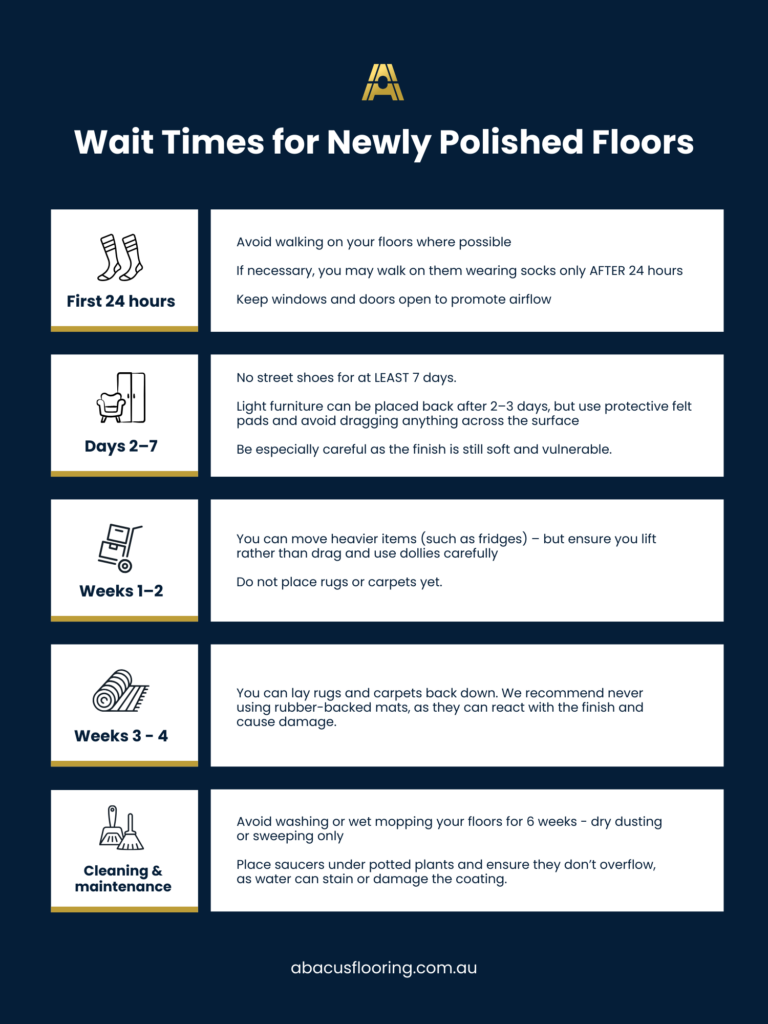
While most floor coatings feel dry within 24 hours, full curing takes approximately 10–14 days. This means your floors may feel ready, but they are still strengthening beneath the surface.
First 24 hours
- Avoid walking on your floors where possible.
- If necessary, you may walk on them wearing socks only AFTER 24 hours.
- Keep windows and doors open to promote airflow, which helps the curing process. You may notice our team leave a window or two open to help the floor dry evenly.
Days 2–7
- No street shoes for at LEAST 7 days.
- Light furniture can be placed back after 2–3 days, but:
- Use protective felt pads
- Avoid dragging anything across the surface
- Be especially careful as the finish is still soft and vulnerable.
Weeks 1–2
- You can move heavier items (such as fridges) – but ensure you:
- Lift rather than drag
- Use dollies carefully
- Do not place rugs or carpets yet.
Weeks 3 – 4
- You can lay rugs and carpets back down. We recommend never using rubber-backed mats, as they can react with the finish and cause damage.
Cleaning & maintenance
- Avoid washing or wet mopping your floors for 6 weeks
- Dry dusting or sweeping is fine
Place saucers under potted plants and ensure they don’t overflow, as water can stain or damage the coating.
What happens if I walk on my polished floors too early?
Walking on floors before they’re fully dry can leave permanent footprints, smudges, or impressions in the finish. Moving furniture too soon can cause deep scratches, drag marks, or areas where the finish peels away from the timber. These issues often require partial or complete refinishing to repair, adding time and expense to your project.
Final Advice
Every timber floor is different, and the drying and curing times mentioned above are guidelines based on the specific products we use and typical Sydney conditions. Some floors may need more time and attention depending on the timber species, age of the floor, and seasonal weather conditions. Always consult with your floor polisher for specific instructions and guidelines tailored to your particular floor and the products they’ve used.
Being patient during the drying and curing process protects your investment and ensures your timber floors will look beautiful and perform well for years to come.
Contact our team at Abacus Flooring for high-quality professional floor sanding and polishing services in Sydney. We’ll guide you through every step of the process and provide clear instructions for caring for your newly polished floors.